
Carried Forth from Silence
Not avoidance, but movement


“In TOTAL attention is silence.” - Jiddu Krishnamurti
I took the quote above as it points on a phenomenon which happens when you completely immerse into the present moment. With all your senses. Your body. The silence which appears then is the silence of mind. The state of no-thought. Not by force, but attention. I’d call it “real meditation”, but that is again simply a word. So is silence and it may have different flavours, mean something different depending on context and how you approach it.
When I recently read an essay on Substack titled The Price of Silence: What Self-Betrayal Does to the Brain, I became curious - because I could not relate to the title at all.
Anyone who reads me will have noticed already:
silence is mostly a refuge for me.
Nothingness, the essence of all existence.
When people ask what song do you listen to right now it is likely that I say “The sound of my oven warming up”, or the refrigerator humming on and off, or the birdsong outside the window or the little river bubbling along.
However, the narrator was writing - I assume - from a very personal point of view:
that of not speaking one’s voice and the consequences of it.
Which is totally valid.
But what felt incomplete was that she equated silence with self-betrayal and avoidance.
She suggested, through her wording, that silence as such does something harmful to the brain and nervous system.
I wrote a reply.
I agree and disagree.
For me - both from experience and from physiological, psychological, social, and neuroscientific perspectives -
“Silence is bad” is a generalisation.
Silence itself does not have a fixed negative or positive effect on the body.
It depends on context. As words - spoken especially, but not necessarily only- depend on tone, nuance, temperature, on how it is said, to whom- so where they arrive-, on what the body and energy shows that is saying them, as well as what the body receiving them already carries.
Not talking (about emotions or anything) - silence - is not inherently harmful.
That is only true when what is meant by “silence” is suppression or avoidance of what is going on within.
Speaking can help.
But it is not always required to process emotion.
Somatic Experiencing and mindfulness work directly with felt sense.
Neuroscientist Dr. Jill Bolte Taylor highlights felt awareness and how brain physiology underlies emotional experience.
Clinical research does not dismiss verbal expression - but shows it is one tool among several for regulation.
Personally, I have extremely good experiences with silence.
Not as suppression, but as a reduction of speech and commentary -
to directly connect with and stay with feelings. Or simply: with what is.
I once did this for about a month.
Agitation in the mind reduced.
Feelings were allowed to complete their circuits in the body.
Overwhelm softened.
Stress dropped drastically.
I even gained weight without eating more - I suspect my brain no longer burned excessive energy on constant prefrontal narration.
So it is not black or white.
What matters most is how you relate to your emotions or all inner movements, not simply whether you speak them. You can also avoid emotions by talking about them instead of truly feeling them viscerally.
Avoidance tends to perpetuate distress more than mindful awareness -
whether or not you speak.
As we exchanged in the comments, she clarified.
And I’d say the key distinction was between silence and being silenced.
What silences us is not necessarily or always the outside -
but often an inner part fearing the consequences of speaking one’s voice. That may apply even more in unequal, abusive power structures which were the context of the essay.
I know that part well too. Happened just lately (other story and I am quite proud that I didn’t buckle down under pressure).
Still, in many ways I’ve come to realise that silence or stillness itself is not harmful.
Au contraire.
I’ve had startling - and actually wonderful - experiences with myself and with others when choosing silence over words.
To connect, inside out.
Often we associate silence - and even more, nothingness - with something negative.
So, through returning to my own experiences, I’d like to invite you to look through a fresh lens.
First, I’ll redirect you to a piece I wrote some time ago - about connecting through a fart.
But- other “silent memories” came up too…
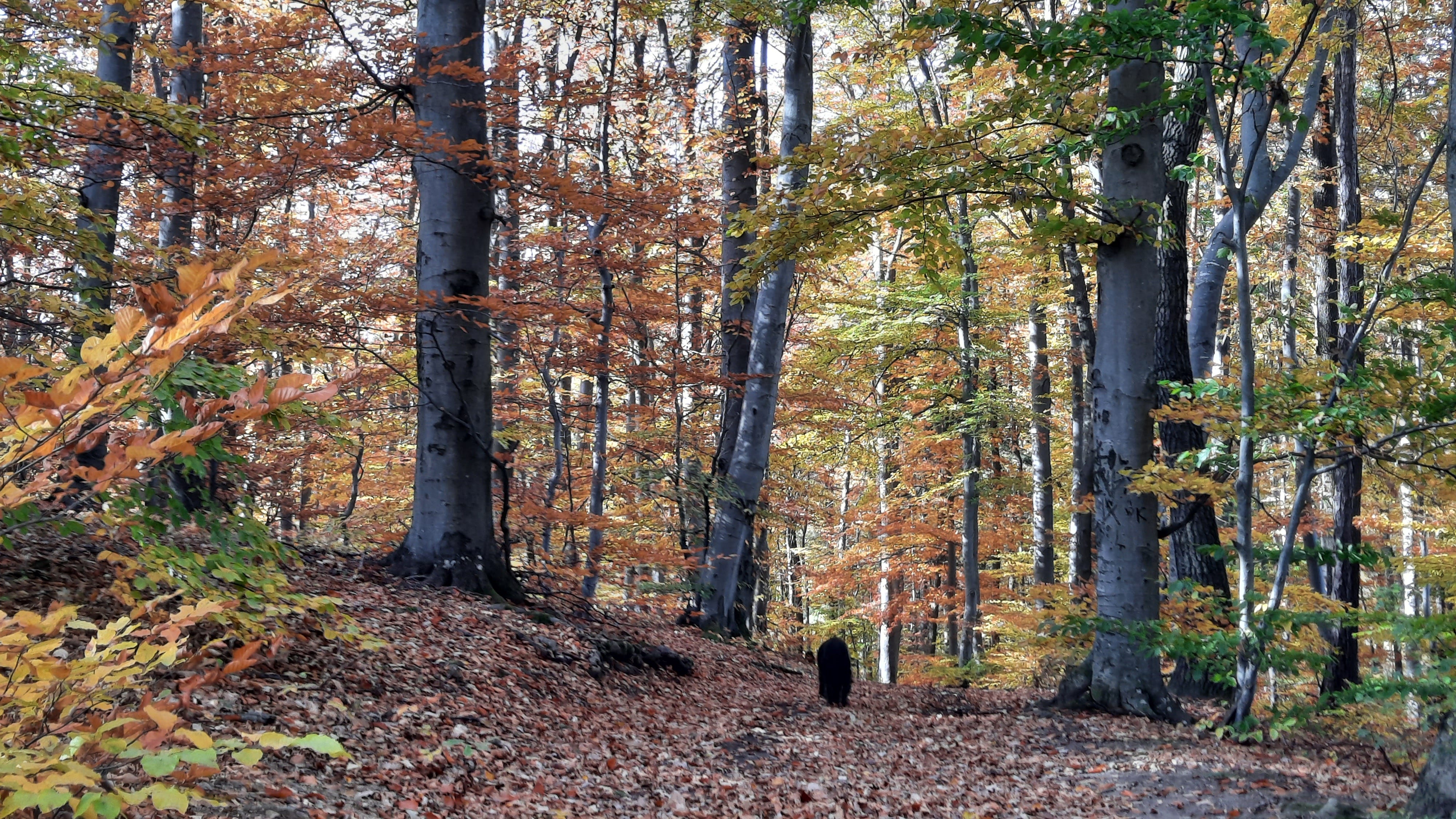
I want to give another sweet example, another experiment.
You may have heard of Metta - loving-kindness practice.
Originally, it is not sentimental, not performative, not about becoming “nice.”
I would say an effect of Metta is that it trains the nervous system to relate differently and more refined to experience.
Not to stay open at all costs -
but to remain fluid where one would normally lock into threat.
To move between activation and settling.
To soften, then re-engage.
To adapt.
In its simplest form, metta is an orientation of goodwill - toward oneself and others - held without demand.
It doesn’t erase fear or pain. It changes the field in which they arise.
Not as philosophy.
As physiology.
As I am a bit experimental, not very formal, and not particularly devoted to repeating phrases in my mind ( may you be happy, may you be at ease,…), I re-arranged the practice in my own - silent - way.
It was a time when I lived almost entirely in my heart, barely spending concrete time with people and accompanying my very old dog Lenny toward physical death. In that time I didn’t speak much in general, as my focus was concentrated in the sensual word, in immediacy, in order to be able to understand and interact with my beloved animal.
We walked several times a day.
Slowly.
Steadily.
There was no need to watch him constantly, no vigilance like now with little rocket Ben. My body could drop its guard. My pace softened. My breath found its own rhythm.
And somewhere along those walks, something began to happen on its own.
I started to look into the eyes of every person coming toward me.
And I smiled at them.
Not strategically.
Not benevolently.
Not to get a response.
Just… openly.
The relaxed ones smiled back immediately. Some greeted (Unusual in more urban areas).
The bitter ones hesitated - then something in their face loosened or lit up.
Some needed a second, as if their system had to check whether this was safe.
In a few cases, nothing happened at all - you know… a phone held up like a shield, a mind sealed elsewhere.
But most of the time, without a single word exchanged, there was contact.
A brief settling.
Eye contact.
Facial muscles.
Vagus nerve I guess initiating.
Safety signals passing quietly between bodies.
Connection.
And that through language without language. Pre-verbal.

Some years before, during the time Rebelleheart (my debut book, just released) was written, I often felt as if I was falling apart.
Pain was frequent.
Sorrow close to the surface.
One day, instead of hiding it, I chose to walk exactly as I was.
Normally, when we are sad or insecure, the body folds inward. Shoulders roll forward. Chest protects the heart. Eyes drop to the ground. Or we cover our face.
The nervous system- who may have learned that over a long time, no matter if it is still functional or not, if the moment truly requests it or not- tries to make us small to protect us.
Invisible.
Safe.
That day, I did the opposite.
I walked.
My eyes shimmering with tears.
My head upright.
My heart pounding.
Sadness - present.
Insecurity - present.
Feeling completely fucked up - present.
Inhale.
Exhale.
And slowly, without forcing anything, my body reorganised around the truth of the moment.
It felt strangely like growing to my full size by showing what was simply there. Which in a way is how (in best case, that gets often diminished quite soon) small children move through this world, crying openly, showing themselves exactly how they are in a moment. No hiding needed.
I met the eyes of strangers - not to be strong, not to be healed, but to be seen as I was.
No words.
No explanation.
No flinching.
Just presence, moving through the street.
Just…… being.
Something shifted.
Not because fear, insecurity or pain had disappeared, but because they were allowed to move. And something remarkable happened: the system did not collapse.
It steadied. It adapted.
In those silent encounters - a gaze held, a smile exchanged, tears witnessed without rescue - we relate within that moving, beyond language.
Beyond strategy.
Maybe into who we truly are.
Maybe into love.
Maybe into whatever it is.
Words can circle it.
Writing can gesture.
I try and try again and still- always fail.
Because what carries it is the lived moment itself.
Maybe this is what silence can be.
Not necessarily the absence of voice or noise, not a turning away,
but a deeper form of intelligence operating, listening.
A listening that happens in the body before it becomes thought.
In the breath before it becomes language.
In a gaze held long enough for the nervous system to remember and to re-arrange over time how to move, how to settle, how to meet.
Then there is no self-betrayal, but embodied self-reclamation.
Perhaps- to stretch a little farther- love is not something we define, but something that appears when we stop tightening around what is.
It is embodying ones being within that noisy, at times unsettling, world.
In walking.
In speaking or writing when needed.
In being seen as we are.
And maybe that is the strength which unfolds from silence.
The wonder ever there, and rising from nowhere.
“Out beyond ideas of wrongdoing and rightdoing there is a field. I’ll meet you there. When the soul lies down in that grass the world is too full to talk about.” —Rumi
A final note:
Although silence or stillness holds everything and is by itself complete, this piece isn’t.
For example it does not address in more fullness how precise, subtle, varied, clear animals are in this world, communicating and interacting without using a single word. Often even over remarkable distances.
For us silence and stillness or what we connect with it may have other tastes too and often- or in the first place- it isn’t comfortable. In its simple being it can be rather inconvenient, as in it we meet ourselves- all aspects, physically, mentally, emotionally- fully and without distraction. And no one is even clapping!
And- there are much much more angles which hoover around or towards or from it.
I am curious if you had moments like that or how you relate to silence? In what context? That can be completely different too! Feel free to comment, add perspectives, tastes, experiences. If you have one or know one, feel free to drop a link of your own or another essay about the (non)subject, lets assemble a rainbow together!
I may not be the most consistent writer, not in timing nor in what kind of words or topics appear (there is a sort of thread through all of them, but it can suddenly happen that I get odd or different or new), but if you feel…something… you may want to subscribe or restack or look through older posts or whatever fits for you.
So if I grow silent, below some older pieces to explore.
Some Older Posts:
Papa
No Path. Immersion.
À l’attaque
Human Superiority?
Yoga and Yoga- The Power of Presence
What is touch, and how do you touch? Part 2 of 3
A Plea for the banished ones
And last but not least the reason why I ended up here, writing how I write and everchanging, is in my not-quite-a-memoir “Rebelleheart”. I wrote in times of great inner turmoil, within a love that defied categories, personal letters and reflections which originally weren’t meant for the world. Or then- I hesitated years to just birth it, for being too personal.
Sean Grogan - a dear substacker, putting images, experience, into music (visit him—> https://substack.com/@seangroganluxembourg) - wrote on Amazon:
”As I read Rebelleheart, I was aware that this was a memoir unlike any I had read before. Karin Sziva’s writing is raw and intense, and the images and scenes she describes are vivid, resulting in an effect that is often strikingly beautiful. The book is a series of fragments (emails, thoughts, and confessions) that feel immediate and very alive; it is as if she has painted the words on the page with great feeling, written straight from her nervous system rather than carefully edited into shape.”
The ebook is available worldwide on Amazon.
In the second half of January the print versions will be available too.
Wonderful reflection...
I like the way you speak of silence not as absence, but as a living presence.
This gives a feeling of the gentle unfolding of awareness, and the courage of simply being. Here, in the unspoken, love is not declared. It is simply inhabited.
Thank you 🙏
Ahhh again I agree with your take on silence and connection through embodiment. Personally for me being in silence is a gift. That’s where I truly connect with myself. It’s where I find peace and clarity. And many times darkness, sadness and anxiety. But without the silence how will we ever truly know and feel and connect to those emotions. Silence is necessary for embodiment and truly finding yourself. I think many are afraid of silence because you’re just left with yourself, your shadow, everything you are. It’s not easy to sit with that.